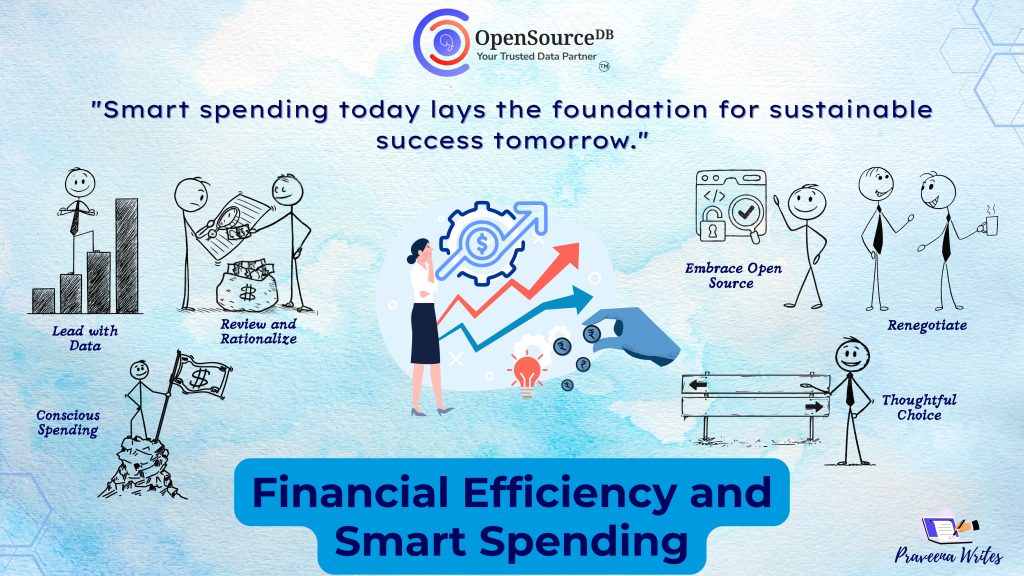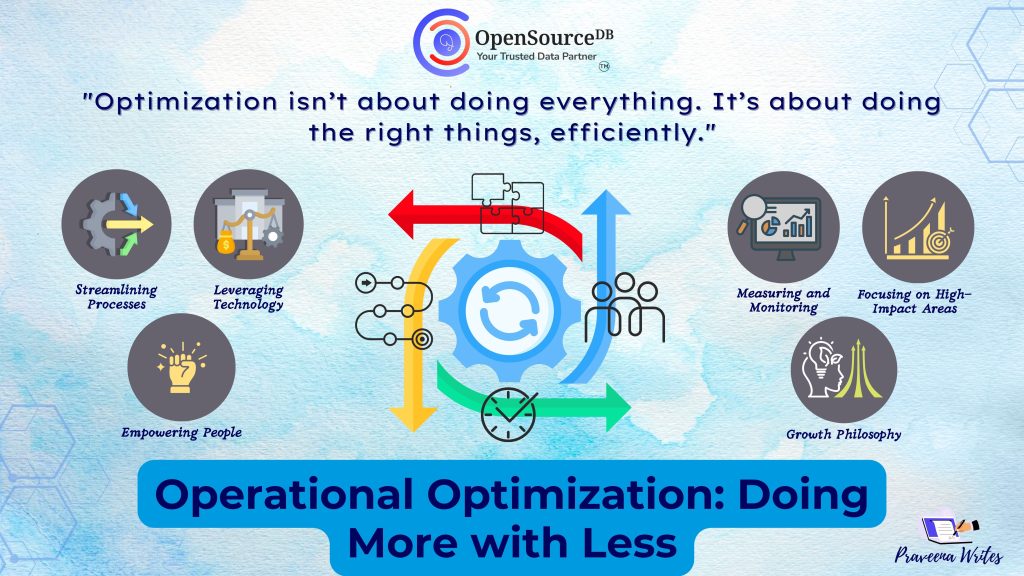
Simplify Strategy: Less but Better
Simplify strategy: Less but betterMost teams believe more = better.More goals. More projects. More metrics. Reality: That ambition often backfires. […]
Simplify Strategy: Less but Better Read Post »
Simplify strategy: Less but betterMost teams believe more = better.More goals. More projects. More metrics. Reality: That ambition often backfires. […]
Simplify Strategy: Less but Better Read Post »
Introduction: In PostgreSQL, Asynchronous parameters are essential for optimizing how the database performs background operations, manages disk I/O, and executes
Understanding PostgreSQL Parameters: Asynchronous parameters Read Post »
Introduction In the previous blog, we explored the fundamentals of logical decoding and logical replication. Now, let’s go one step
Week 4 – In fast-moving environments, speed alone isn’t enough—learning quickly and iterating effectively is what separates high-performing teams from
Building Feedback Loops Across Teams for Faster Learning and Iteration Read Post »
Introduction PostgreSQL, a powerful open-source relational database, offers multiple replication strategies to support high availability, scalability, and integration. Among them,
Logical Decoding and Logical Replication in PostgreSQL Read Post »
Week 3 – Architecting August blogpost – As we celebrate Independence Day, we often think about freedom in terms of
Setting Up Repeatable Processes: The Freedom to Focus on What Matters Read Post »
Let’s learn how to compress, clean up, and retain PostgreSQL WAL files efficiently for PITR, replication, and backups. PostgreSQL’s Write-Ahead
Best Practices for WAL Archiving: Compression, Cleanup & Retention Read Post »
Choosing the Right Tech Stack: Balancing the Now vs the NextWhen you’re building a product — especially in a startup
The Founder’s Dilemma: Familiar vs Fit-for-Future Read Post »
Introduction: One of our customers were experiencing high CPU utilization during specific operations. We conducted close monitoring of the system
PostgreSQL Index Testing with HypoPG extension Read Post »
Architecting August – Week 1 In the zero-to-one phase, most startup decisions are reactive.You hire fast. You build fast. You
Designing Startup Systems That Scale: Hiring, Tech, Culture, Ops Read Post »
Introduction Schema migrations in PostgreSQL are notoriously hard to get right, especially when your systems require zero downtime. Anyone who’s
pgroll in Action: Client-Side Evaluation of Zero-Downtime Schema Migrations Read Post »
🧩Week 4 Theme: Sales and GTM Jumpstarts for Early-Stage Startups“Jump-start July” Series – Insights and tactics to accelerate early wins
Sell Before You Scale: GTM for Founders Who Hate Selling Read Post »
This is the part 2, continuation of the blog Upgrading PostgreSQL 12.15 to 14.18 in RHEL 8 Air-Gapped Systems: A
🧩 Jump-start July — Week 3From Solo to Squad: Building the Startup Core Team RightThe first people you hire aren’t
From Solo to Squad: Building the Startup Core Team Right Read Post »
Recently, I had the opportunity to upgrade one of my client’s PostgreSQL databases. The environment is a High availability setup
🚀 The First 90 Days: Finding Traction Without Burning Out Jump-start July – Week 2You don’t need a million users
Gaining Traction in 30/60/90 Days Read Post »
When leveraging PostgreSQL for your application, PgBouncer is the go-to connection pooler for high concurrent workloads. You might already be
How We solved prepared statement issues with PgBouncer’s pooling modes Read Post »
We’re kicking off Jump-start July with one of the biggest unlocks for early-stage startups: designing your MVP to move fast
How to Design Your MVP for Speed & Feedback Read Post »
Introduction: The background writer is a crucial component in PostgreSQL that plays an essential role in maintaining database performance and
Understanding PostgreSQL Parameters: Background Writer parameters Read Post »
Every startup journey begins with a flicker of an idea. For Hari, the founder of OpenSource DB, that spark came
From Idea to Traction Read Post »
Introduction: I highly recommend starting with Part 1 of this blog series. In Part 2, we’ll dive into more advanced
Understanding PostgreSQL Parameters: Tuning Vacuum Parameters – Part-2 Read Post »