
Security September — Part 1
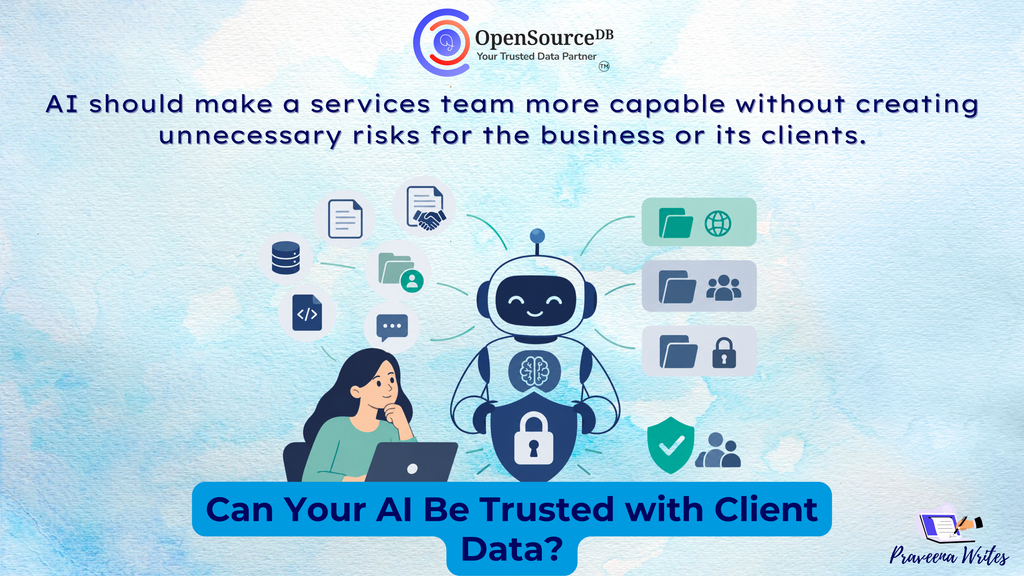
Can Your AI Be Trusted with Client Data?
AI can help a small services team write faster, analyze information, summarize meetings, and support everyday decisions. But there is one question every founder should ask before putting AI to work:
What happens to the data we give it?
For services businesses, this question matters even more because client data is often the business itself. Proposals, contracts, source code, financial information, customer records, internal documents, and confidential conversations can all pass through everyday workflows.
Convenience Should Not Come Before Privacy
It is tempting to copy a client document into an AI tool and ask for a summary. Or paste a customer conversation and ask AI to identify the key issues.
The workflow may take seconds.
But before doing it, ask:
- Is this data confidential?
- Are we allowed to share it with an external AI service?
- Where is the data processed and stored?
- Who can access it?
- How long is it retained?
- Are we using personal data unnecessarily?
AI adoption should not mean giving up the basic privacy practices you already follow.
Start With a Simple Data Classification
Small teams do not need a complicated security framework to get started.
Begin by separating information into three categories:
Public: Information that can safely be shared with an AI tool.
Internal: Business information that should only be used with approved tools and processes.
Confidential: Client data, credentials, contracts, personal information, proprietary code, and other sensitive
information that requires explicit controls.
This simple classification can prevent many accidental data leaks.
Build AI With Trust in Mind
At OpenSource DB, we believe technology adoption should be practical and responsible. AI should make a services team more capable without creating unnecessary risks for the business or its clients.
That means asking security questions at the beginning of an AI initiative, not after something goes wrong.
You don’t necessarily need to build your own AI model. You do need to understand what data goes into your
AI workflows and where that data goes.
A Simple Founder Checklist
Before introducing an AI tool to your team, ask:
☐ What problem are we solving?
☐ What data will the AI access?
☐ Is that data sensitive or confidential?
☐ Is the tool approved for business use?
☐ Who has access to the AI workflow?
☐ Do our client agreements allow this type of processing?
☐ What happens if the AI provider changes its policies?
AI adoption is not just a technology decision. It is a trust decision.
And for services businesses, trust is one of the most valuable things you have.
This is Part 1 of Security September from OpenSource DB. In Part 2, we’ll look at AI contracts, in-house models, and the practical security controls small teams can put in place without creating unnecessary complexity.