
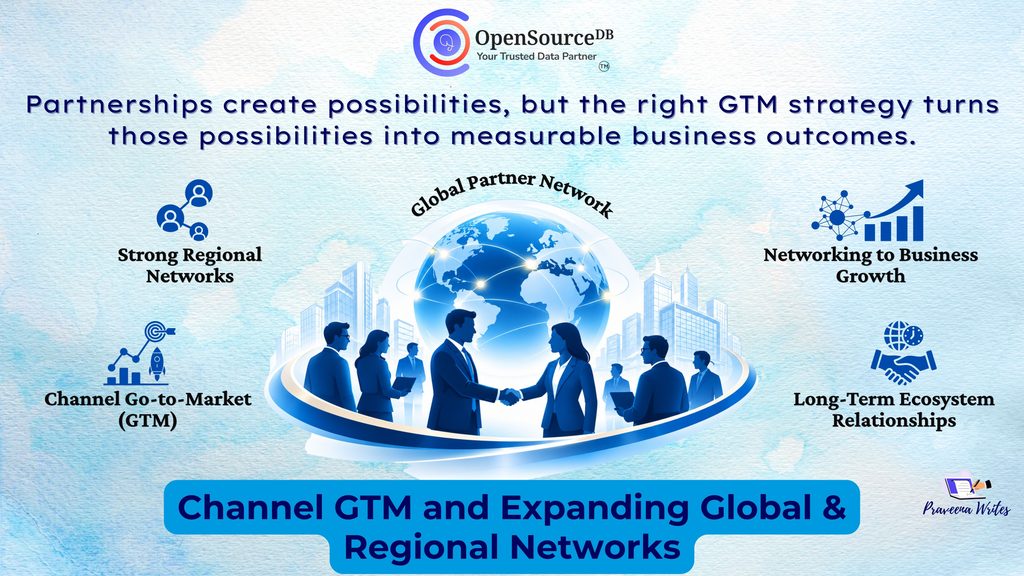
Turning Partnerships into Market Opportunities
Building partnerships is only the beginning. The next step is understanding how to take those relationships to market.
A strong channel Go-to-Market (GTM) strategy helps organizations reach new customers, enter new markets, and deliver solutions through a network of trusted partners.
- Understanding Channel Go-to-Market (GTM)
Channel GTM is a business strategy in which organizations work with external partners to market, sell, implement, or support their solutions.
Common channel partnership models include:
- Reseller Partnerships: Partners sell or distribute your products and services.
- Technology Partnerships: Organizations integrate their technologies to create combined solutions.
- System Integrator Partnerships: Partners help customers implement and manage technology solutions.
- Referral Partnerships: Partners introduce potential customers and business opportunities.
- Strategic Alliances: Organizations collaborate on long-term business and market expansion initiatives.
Choosing the right model depends on the solution, target audience, and business objectives.
2. Building a Global Partner Network
Expanding into international markets requires more than identifying potential customers. Organizations need trusted relationships with local technology providers, consultants, distributors, and implementation partners.
Global partnerships can help organizations:
- Understand international market requirements.
- Reach new customer segments.
- Build credibility in unfamiliar markets.
- Access regional expertise and technical capabilities.
- Identify collaborative opportunities across industries.
Industry conferences, technology events, open-source communities, and business networking platforms can serve as starting points.
3. Strengthening Regional Networks
While global expansion creates new opportunities, regional partnerships are equally important.
Local partners understand customer expectations, industry requirements, business practices, and market challenges.
Building regional networks through community meetups, technology forums, workshops, and industry associations can create stronger relationships and more sustainable business opportunities.
4. From Networking to Business Growth
Networking should not end with exchanging contact details. Relationships need consistent engagement and clearly defined objectives.
A practical approach includes:
- Identify potential partners aligned with your business.
- Understand their capabilities and market presence.
- Explore complementary solutions and shared opportunities.
- Define partnership goals and responsibilities.
- Conduct joint customer engagements and marketing activities.
- Review outcomes and strengthen successful relationships.
Measuring partner-generated leads, joint opportunities, customer engagement, and revenue contribution can help evaluate the effectiveness of a channel strategy.
5. Building Long-Term Ecosystem Relationships
Successful ecosystems are built on trust, shared knowledge, and mutual growth.
Organizations that invest in their partner networks can create opportunities beyond individual projects or transactions. They can build communities of technology providers, developers, consultants, and customers who contribute to a stronger ecosystem.
Conclusion
Partnerships create possibilities, but the right GTM strategy turns those possibilities into measurable business outcomes.
By combining vendor relationships, channel partnerships, and global and regional networks, organizations can expand their reach, strengthen their market presence, and create lasting opportunities in the evolving AI ecosystem.Networking is not just about who you know. It is about what you can build together.